


The Vatican City

Got your passport ready? Step into the world's smallest country: a city within a city, a country within a country...
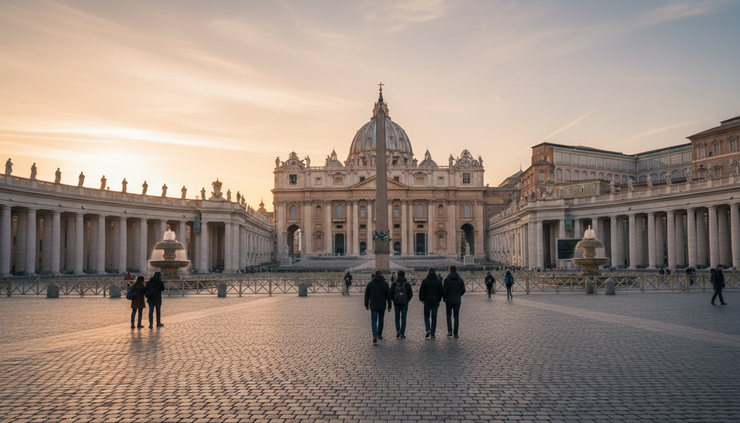
The Vatican City: explore St Peter's Basilica, the Vatican Museums & the famous Sistine Chapel...
Vatican City is tiny on a map, but it can fill an entire day before you realise how much there is to take in. Within its walls sits one of the world’s great churches, miles of museum galleries, courtyards, ancient sculpture, Renaissance frescoes, and the Sistine Chapel ceiling that many visitors have waited years to see. It is also easy to get wrong. Arrive without a plan and the day can turn into long queues, tired feet, missed details, and a rushed shuffle through rooms that deserve time. A good visit does not need to be complicated, but it does need a little structure. This guide covers the essentials: St Peter’s Basilica, the Vatican Museums, and the Sistine Chapel, with practical notes on how to move through them, what to look for, and how to make the most of your time.
The Vatican City:
Vatican City is an independent city-state surrounded by Rome. It is the spiritual centre of the Roman Catholic Church, the residence of the Pope, and home to artworks and buildings that have shaped European culture for centuries. Its size can be misleading: the area is compact, but the main sights are rich, crowded, and physically demanding. The following places are where most visitors focus on are often spoken together, but they are not all entered in the same way:
St Peter’s Basilica stands at the end of St Peter’s Square. Entry to the basilica is usually separate from entry to the Vatican Museums. The basilica is a working church, not just a landmark.
The Vatican Museums are a large set of galleries and collections. They include classical sculpture, Egyptian artefacts, tapestries, maps, papal apartments, modern religious art, and much more.
The Sistine Chapel sits inside the Vatican Museums route. You do not buy a separate standard ticket just for the chapel. It comes at the end of the museum visit for most routes, which means it is wise to keep some energy for it.
(Left) St Peter's Basilica, (Centre) the Pope's Residential Palace & the Vatican Gardens, (Right) the Swiss Guards protecting the Vatican
This matters because many first-time visitors picture a single entrance and a simple order. In practice, the day takes planning. The Vatican Museums entrance is outside the main square, along the Vatican walls. St Peter’s Basilica has its own security queue closer to the square. Some guided tours use routes that connect the museums to the basilica, but this depends on the tour and current rules.

St Peter's Square:
St Peter’s Square was designed by the architect Gian Lorenzo Bernini, at the behest of Pope Alexander VII. It was completed in 1667, after 11 years of intense work. The square is made up of an oval space with semicircular columns connected to the basilica, delimiting a large trapezoidal shaped area, with the largest side consisting of the façade. The two sides open up like a great embrace to Rome and the world. On top of the colonnade, consisting of 284 columns with 140 statues, more than 3m high. The space of the square is dominated by the maternal gaze of the Madonna and Child, “Mother of the Church”. It is a large mosaic copy of the 15th-century icon the “Mater Ecclesiae” (Mother of the Church”) venerated with this title inside the Basilica in the Chapel of Our Lady of the Column. At the centre of the square stands the Vatican obelisk, surmounted by the saving cross of Christ. Originating from the circus of Caligula and Nero, it vividly commemorates the crucifixion of Peter and the tortures suffered by the Roman protomartyrs after the burning of Rome…

Walking down Via della Conciliazione to St Peter's Square
St Peter’s Basilica:
Saint Peter's Basilica is the largest church in the world. It is the heart of Christianity and a universal symbol of spirituality. Explore the Basilica with the Digital Audio Guide, following a path of art and faith that reveals the deeper details of this extraordinary place and its priceless artworks, from Bernini's majestic Baldachin to Michelangelo's Pietà. Don't miss the opportunity to discover the wonder of St Peter's Dome from a unique perspective. Admire up close the beauty of its magnificent mosaics and experience the emotion of observing every detail of this masterpiece with the same eyes as the artist who brought it to life: Michelangelo Buonarroti. Live as a privileged spectator in this place where art and spirituality merge harmoniously, leaving an indelible mark on your heart. The ticket includes access and a visit to St Peter’s Basilica with a Digital Audio Guide. The Basilica entry time is scheduled either one hour before or one hour after your Dome visit time, depending on the expected visitor flow. Please carefully check the entry time slot indicated in your email…

St Peter’s Basilica is more than a famous dome, it is one of the largest and most important churches in the world. It stands on the traditional burial site of Saint Peter, one of the apostles of Jesus and the first Bishop of Rome according to Catholic tradition. The present basilica was built over many decades, with contributions from major Renaissance and Baroque architects and artists. The approach is part of the experience. St Peter’s Square, designed by Gian Lorenzo Bernini, opens like a vast stone embrace. Its colonnades frame the space, while the central obelisk breaks the scale and draws the eye towards the façade. Even before entering the church, the setting tells you that this is a place built for ceremony, crowds, and symbolism. Inside, the first impression is scale. The nave feels immense, yet the decoration is controlled enough that the building does not feel chaotic. Marble, gilding, sculpture, and light all work together.
A collection of images from within St Peter's Basilica including a list of all Popes
A few highlights deserve special attention:
Michaelangelo's Pieta:
Just inside the basilica, on the right, stands Michelangelo’s Pietà. It shows Mary holding the body of Christ after the Crucifixion. The work is behind protective glass, but it still has remarkable emotional force. Many visitors notice the calm of Mary’s face first. The sculpture does not shout. It holds grief in stillness. This is one of the best reasons to enter the basilica with patience. The crowd near the chapel can be thick, but even a few quiet minutes help the work come into focus.
Bernini's Baldachin & the Papal Altar:
At the centre of the basilica, beneath the dome, stands Bernini’s bronze baldachin. It marks the papal altar and visually anchors the huge crossing. The twisting columns, dark bronze, and theatrical height make it one of the defining images of St Peter’s. Below this area lies the Confession, connected with devotion to Saint Peter. The layering of church, tomb, altar, and dome gives the space its power. It is not simply an architectural centre. It is a spiritual and historical centre as well.
A collection of images from within St Peter's Basilica including the crypt where former Popes are buried
The Dome:
For many visitors, the dome is a highlight. The climb gives access to views over St Peter’s Square, the Vatican Gardens, and Rome. Part of the journey may involve a lift, depending on the ticket chosen, but stairs are still part of the experience. The upper passages become narrow and slanted as they follow the curve of the dome. The view rewards the effort, but it is not for everyone. Anyone uncomfortable with tight spaces or many stairs may prefer to enjoy the dome from below. The interior view from the nave is already impressive.
A few practical points make the basilica easier to visit:
Dress modestly, with shoulders and knees covered.
Allow time for airport-style security before entry.
Keep voices low inside, as services and private prayer may be taking place.
Check current access rules if you plan to visit the dome, grottoes, or attend a papal event.


The view from the top of the Dome: St Peter's Square and the rest of Rome
The Vatican Museums:
The Vatican Museums are not one museum in the simple sense. They are a vast group of collections built by popes over centuries. Trying to see every object in one visit is a recipe for exhaustion. A better approach is to choose a few areas to understand well, then let the rest surprise you. The route can feel busy, especially as many people are moving towards the Sistine Chapel. Enjoy the Vatican City's artistic highlights as you step inside the Vatican and head straight for the entrance. No waiting, just wall-to-wall masterpieces. Visit all 4 remarkable collections: classical sculpture, Renaissance masterpieces, and stunning artifacts from Ancient Egypt and the Etruscans. The Vatican Museums are some of the largest museums in the world with an enormous art collection that varies from ancient Roman and Egyptian artefacts, religious objects, beautifully painted rooms and even modern art. The 26 different museums of the Vatican are housed in a complex of multiple Apostolic palaces, and are by far the most popular museum destination in Rome, in part because of the famous Sistine Chapel. During your visit, you will marvel at the many art treasures that the popes have collected in 54 halls since the 16th century…
Inside the Vatican Museum
The Classical Collections:
The Vatican’s classical sculpture is among the great museum experiences in Europe. Works such as the Laocoön group and the Apollo Belvedere have influenced artists for generations. Even without specialist knowledge, the drama of the bodies, faces, and movement is clear. The Laocoön is especially striking. It shows a Trojan priest and his sons struggling with sea serpents. The twisting forms and tension in the marble make it feel alive. It is a reminder that the Vatican Museums are not only about Christian art. They also preserve the ancient world that Renaissance artists studied with such intensity.
The Gallery of Maps:
The Gallery of Maps is one of the most memorable spaces in the museums. Its long corridor is lined with painted maps of regions of Italy, created in the late 16th century. The ceiling is richly decorated, so the room pulls attention in every direction. This gallery is popular for good reason. It offers beauty, geography, politics, and papal history in one space. The maps are not modern navigation tools. They show how power, knowledge, and territory were imagined at the time.

The Raphael Rooms:
The Raphael Rooms formed part of the papal apartments and contain some of the greatest frescoes of the High Renaissance. The most famous is The School of Athens, which gathers ancient philosophers in an imagined architectural setting. Plato and Aristotle stand near the centre, while other thinkers fill the steps and arches around them. The painting is often reproduced in books, but seeing it in its room changes the experience. It was made for a particular space, with surrounding frescoes that speak to theology, philosophy, law, and poetry. Give this area more than a passing glance if the route allows.
The Sistine Chapel:
The Sistine Chapel is the emotional peak of many Vatican visits. It is also one of the hardest places in which to slow down. By the time visitors reach it, they may have walked through galleries for hours. The room is often crowded. Staff regularly remind people to keep silent and not take photographs. Even so, the chapel can be overwhelming in the best sense.

After passing the Pine Cone, end your tour by admiring the Sistine Chapel. Michelangelo created more than 300 figures on over 500m² of the ceiling in his breathtaking fresco. 22 years later, he returned to create The Last Judgement on the entire wall above the altar…
The ceiling, painted by Michelangelo in the early 16th century, tells stories from Genesis. The most famous scene is The Creation of Adam, where the hands of God and Adam nearly touch. Around it are prophets, sibyls, ancestors, and painted architectural frames that create a whole imagined structure overhead. On the altar wall, Michelangelo’s Last Judgement presents a later and more intense vision. Christ appears at the centre, surrounded by saints, angels, the saved, and the damned. The mood differs from the ceiling. It feels more forceful, more urgent, and more unsettled. The absolute highlight of the route through the Vatican museums is a visit to the Sistine Chapel. The name is derived from the founder of the chapel, pope Sixtus IV. The impressive ceiling of this 15th century Sistine Chapel was painted in the 16th century by Michelangelo. It portrays the story of creation, the great flood and other scenes. The side walls are equally beautiful with paintings of the life of Jesus made by Ghirlandaio, Botticelli, Perugino, Pinturicchio and others. The wall behind the alter shows Michelangelo's painting of the ‘Last Judgement’. The Sistine Chapel is mostly known for being the space where the cardinals meet for conclave when electing a new pope. When a new pope is being elected, smoke comes from the chapel's chimney twice a day. White smoke means a new pope has been elected, while black smoke means the cardinals were not yet successful in their mission…

The Creation of Adam: where the hands of God and Adam nearly touch
It helps to know this before entering: the Sistine Chapel is not only a gallery space. It is a consecrated chapel and the place where papal conclaves are held. That is why silence matters. The request is not just about crowd control. It protects the character of the room.
A useful way to look is to break the room into three levels:
The ceiling scenes from Genesis above.
The side wall frescoes by artists such as Botticelli, Perugino, and Ghirlandaio.
The altar wall with Michelangelo’s Last Judgement.
Here are some Top Tips:
The best Vatican visits balance ambition with restraint. There is always more to see than one day can hold, so the goal is not to conquer the place. The goal is to leave with clear memories rather than a blur of corridors.
Book timed entry for the Vatican Museums when possible. The ticket system and visitor routes can change, so always check official information before the day. Late morning and midday are often busy, while early slots can feel more manageable. Afternoon visits may work well too, especially for those who prefer a slower morning in Rome.
For St Peter’s Basilica, arrive early if possible. Security queues tend to grow as the day goes on. If you plan to climb the dome, do it before you are tired from the museums.
Dress code is simple but enforced. Shoulders and knees should be covered for both the basilica and the museums, since the Sistine Chapel is part of the museum route. A scarf or light layer can solve the problem in warm weather, but do not rely on being waved through if clothing is too revealing.
Think carefully about guided tours. A good guide can make the Vatican far easier to understand, especially in the museums, where the amount of art can be overwhelming. A tour can also help with timing and context. Independent visitors, by contrast, get more freedom to pause, backtrack where allowed, and set their own pace.
And
The Best Plan:
Start early in St Peter’s Square.
Enter St Peter’s Basilica and see the Pietà, the nave, the baldachin, and the dome area.
Climb the dome if it is a priority.
Take a proper break before the museums.
Enter the Vatican Museums with a timed ticket.
Focus on selected highlights rather than every room.
Finish with the Sistine Chapel and give it your remaining attention.
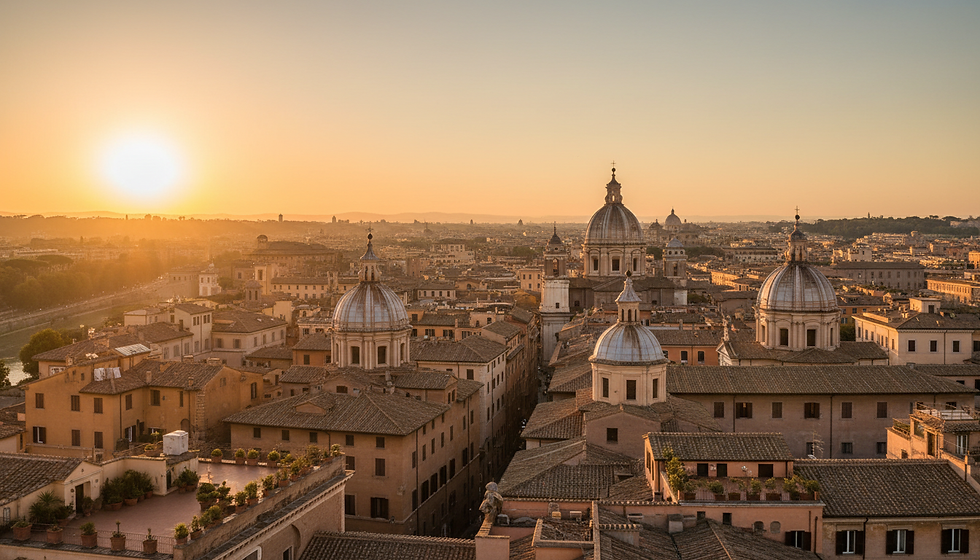
Heading back into to Rome? I'm sure you're not going to miss out on the Colosseum, so check these blogs out too for all the latest tips!


Comments